
Screens, Stress, and Space to Breathe: What Youth Really Need
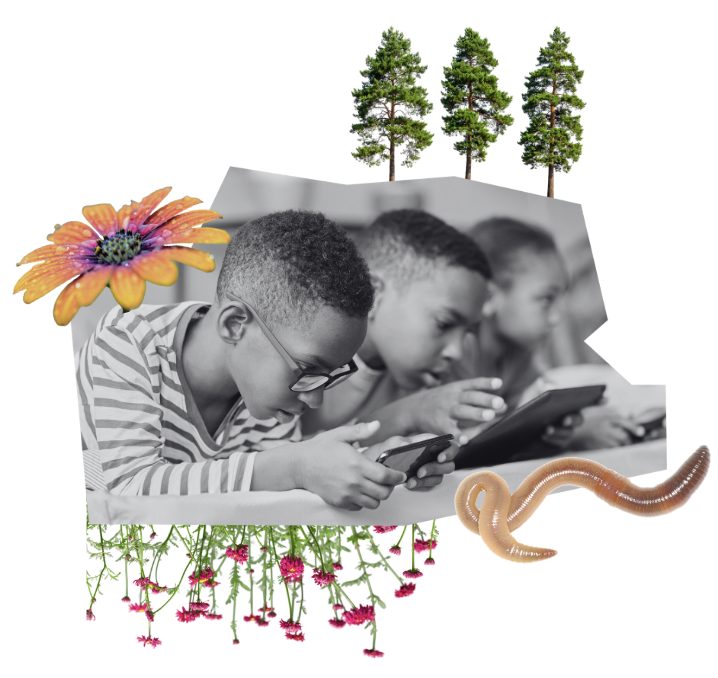
These days, parents and caregivers don’t need to be convinced that too much screen time isn’t great for kids. You’ve seen it play out in real time. Short attention spans. Mood shifts. Trouble pulling them away from the screen once they’re fixed on it.
At this point, the conversation has moved beyond whether screens have an impact. What tends to feel less clear is what to actually do about it.
 Start With What Kids Already Know
At Camp Fire Central Oregon, what we've found is one of the most helpful places to start isn’t with rules, but with awareness. Kids don’t need a deep explanation of brain chemistry to understand that something feels different after a long stretch on a device. If you ask a simple question: How do you feel after being on your phone/tablet/laptop for a long time, most can answer it honestly.
They might not have the exact language for it, but they recognize the feeling of being sucked in, stuck…mesmerized, even.
Awareness matters more than you might think. That’s because it creates a starting point that isn’t about control or restriction. It’s about helping them notice patterns for themselves.
We also recommend having a conversation around the addictive nature of screens and apps, and how most companies are intentionally trying to keep us on our phones and hold our attention hostage. This conversation can start as early as fourth grade and should be ongoing. It helps young people know what they are up against and how it impacts our brains.
Make Room for Something Better
From there, the challenge becomes less about taking screens away and more about what fills the space when they’re not there.
That’s where many attempts fall apart. When screens disappear and nothing meaningful replaces them, they come right back. Sometimes with a not-so-healthy dose of resentment.
At Camp Fire, this is something we plan for intentionally. In many of our programs, especially in outdoor and camp settings, young people step into environments that are completely phone-free. But an important note is that our focus isn’t on what’s being taken away; it’s on what’s being offered instead.
→ Time that isn’t scheduled down to the minute.
→ Space to be with others without distraction.
→ Opportunities to try new things without worrying about how it will look online.
→ Freedom from the constant pressure to always be “in the know”.
 What Happens When Kids Get That Space
The transition isn’t always smooth at first. There’s often a bit of restlessness, a sense of discontent, wondering, “What do I do now? That reaction is real, but it doesn’t last.
When you give it a little time, something begins to shift. Conversations stretch out. Kids start making eye contact again. They find ways to fill time that don’t rely on a screen.
And when you ask them about it afterward, their responses tend to be surprisingly consistent (and positive!):
- They report feeling calmer.
- They feel less distracted.
- They feel more connected to the people around them.
Campaigns like The Reset from Outward Bound have highlighted similar reflections from teens, many of whom describe a mix of initial discomfort followed by a sense of relief they didn’t expect.
One camper said it simply:
“At first it was weird… then it felt like I could actually breathe.”
Why Time Outside Changes Things
A big part of this shift is tied to being outside. Not just away from screens, but in a different kind of environment altogether. At Camp Fire Central Oregon, we put emphasis in our programs around getting outside, building character and developing values around curiosity, compassion, and confidence.
Time in nature, green time, has been consistently linked to lower stress, improved focus, and even reduced smartphone use. Research published in journals like Environment and Behavior points to a clear connection between exposure to nature and overall well-being.
At Camp Fire, outdoor time isn’t treated as a break from development or as a “nice to have” feature. It’s a fundamental part of how we view youth development.
Whether it’s hiking, sitting by a campfire, or just having unstructured time outside in an open space, something changes when kids are outside.
They settle more easily. They pay attention differently. They attune to themselves and to others in a different, more present way.
And importantly, they don’t have to be convinced to put their phones down. The environment does that for them.
 Bringing It Into Everyday Life
For families, translating these ideas into everyday life doesn’t have to mean big, dramatic changes. We’re not asking you to suddenly morph into an always-outside, adventure-camping-spelunking group that wants to take on the world.
Instead, think of the smaller, more consistent shifts that have a good chance of sticking.
This might look like a walk after dinner, even if it’s a short one. It could be deciding that each weekend, you’ll carve out time to be outdoors no matter what. Maybe it means letting boredom linger a little longer than feels comfortable, trusting that it often leads to creativity and connection if given the chance.
It’s important to also reflect: What are you modeling for your kids? Are you always on your devices?
It can also help to shift how you frame this in your mind. Instead of focusing on limits (aka less screen time), highlight the benefits of adding things in.
→ More time outside
→ More time connecting with loved ones
→ More opportunities (and freedom!) to move, explore, and reset. More time for more fulfilling interests and activities.
When you replace screen time with something meaningful, the screens tend to lose a lot of their pull.
Look Beneath the Screen Time
At the same time, it’s worth remembering that screen use is often tied to something deeper.
Boredom. Stress. A desire for connection.
Addressing those underlying needs can make a bigger difference than any rule or restriction ever will.
This is where Camp Fire’s broader approach to youth well-being comes in. Programs like CampWell, developed in partnership with the American Camp Association and the Alliance for Camp Health, are designed to help young people build the skills to understand what they’re feeling and how to respond. Tools like MyView Digital Empathy, developed by Tickit Health, give youth a way to reflect on their emotional state and access support when they need it.
Awareness is everything, and tools like these help youth notice, reflect, and act to correct potentially unhealthy patterns of behavior in their lives.
 Centering Youth Voice in the Solution
As more communities think about how to respond to the impact of social media, one insight is becoming very clear: young people must be part of the conversation.
Efforts highlighted by the Children’s Funding Project emphasize not just investing in youth well-being, but listening to youth directly when designing solutions.
This can be as simple as asking young people:
- What makes it hard to put your phone down?
- When do you feel most connected to people?
- What would make screen-free time more fun/appealing?
When young people help shape the “why” and the “what instead,” the shift feels less like something being taken away and more like something they’re choosing for their own betterment.
This approach is becoming even more important as states and communities begin to direct funding from recent social media settlements toward youth mental health and well-being. The question isn’t just where the funding will go, but whether it will be used in a way that actually makes a difference in young people’s lives.
Camp Fire is proud to be a partner in efforts like Fund IRL, which works to ensure that resources from recent social media settlements are directed toward solutions that support youth mental health, digital well-being, and access to real-world connection.
Because ultimately, the goal isn’t just to reduce screen time.
It’s to build a world where young people have meaningful alternatives to connect with themselves, others, and the outdoors. And to have a voice in shaping how that happens.
Expanding What’s Possible for Kids
When young people have regular access to time in nature, meaningful relationships, and space to think for themselves without constant, algorithm-driven input, something crucial begins to take shape. They learn how to move between fast and slow, between digital and real-world experiences, without feeling pulled too far in either direction.
Over time, that balance becomes something they carry with them.
Not because someone told them to log off or else, but because they’ve experienced what it feels like to step away, and what they gain when they do.
Explore Camp Fire Programs
As more communities invest in youth well-being and healthier digital environments, access to spaces like this matters.
Camp Fire programs are one way to make that possible.
Explore programs near you → https://campfire.org/programs/