
A New, Meaningful Partnership with Puyallup Tribal Enterprises and Puyallup Chocolates

For nearly 70 years, generations of Camp Fire youth learned sales skills, built confidence, and shared joy through the classic mint patties that became a symbol of the season. When that long chapter came to a close in 2024, our community began searching for what could come next.
What we found wasn’t just a new product to sell; rather, we found a promising new partnership that is rooted in shared values, cultural respect, and the next generation of youth leadership.
We are proud to announce that Camp Fire is partnering with Puyallup Tribal Enterprises, the parent company of Puyallup Chocolates, for our annual candy sale. What began as a conversation about chocolate quickly became something deeper: a shared vision for community, growth, and resilience.
“We’re excited for this to be a transformational partnership, not just a transactional one,” said Shawna Rosenzweig, CEO of Camp Fire National Headquarters.
A Connection Built on Shared Community
The relationship between Puyallup Chocolates and Camp Fire began with a connection: Matt Wadhwani, CEO of Puyallup Tribal Enterprises and CFO of the Puyallup Tribe of Indians (PTOI). As a Camp Fire parent, Matt has seen firsthand how the program helps young people grow into their strengths.
“Camp Fire’s mission and our tribal values align beautifully,” said Amy McFarland, a tribal member and longtime educator who now serves as the World Cup Project Director for PTOI. “We both believe in the potential of young people and the importance of community support.”
That alignment became the foundation for a broader collaboration between the two entities. What began as a discussion about chocolate sales evolved into an opportunity to co-create youth programming, including a financial literacy curriculum that links fundraising, goal-setting, and real-world learning.
About the Puyallup Tribe and Its Enterprises
The Puyallup Tribe of Indians is one of the most visible and active Native tribes in the Pacific Northwest. Based in Tacoma, Washington, the Tribe operates a network of organizations that support its members and the wider community.
 At the center is the Tribe itself, surrounded by entities that care for the whole person and community. Some of those include the Chief Leschi Schools for education, the Puyallup Tribal Health Authority, Emerald Queen Casinos, and, of course, Puyallup Chocolates.
Amy describes this system as “spokes of a wheel” connected by a shared commitment to people and place.
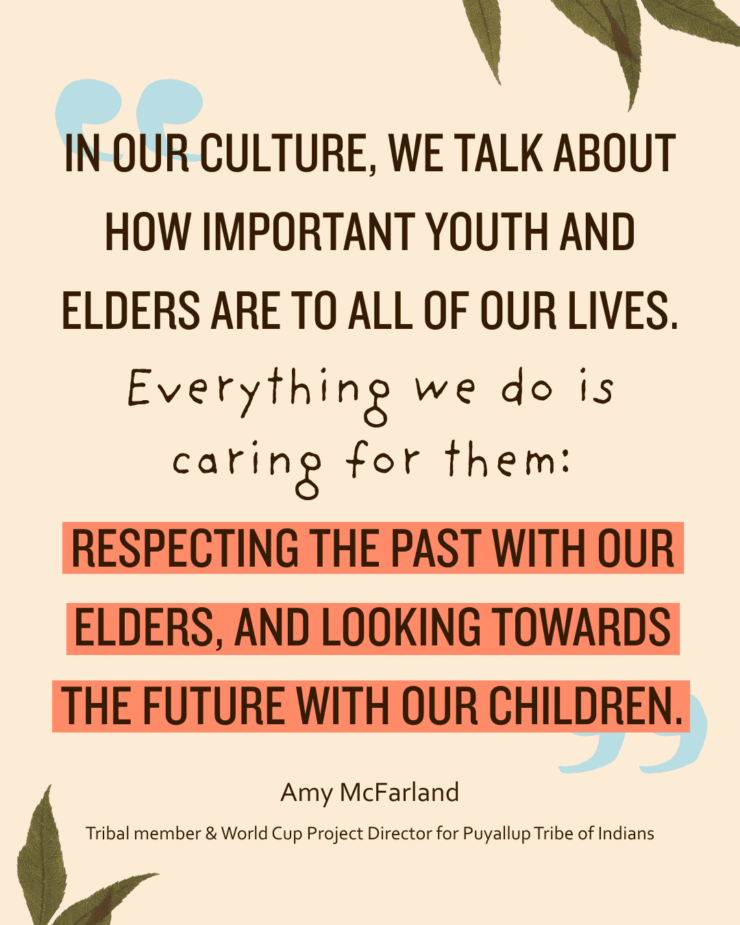
“In our culture, we talk about how important youth and elders are to all of our lives,” she explained. “Everything we do is caring for them: respecting the past with our elders, and looking towards the future with our children.”
That philosophy shows up in the Tribe’s focus on language revitalization, environmental stewardship, and cultural preservation. In recent years, they have launched major partnerships with organizations like the Seattle Seahawks, Seattle Sounders, and the University of Washington. As Seattle prepares to host international visitors for the 2026 FIFA World Cup, the Tribe sees it as another chance to share its story and its impact with the world.
“This is an opportunity for people to see who we are,” Amy said. “To understand that we are still here, still thriving, still growing.”
Shared Learning and Leadership
The partnership between Camp Fire and the Puyallup Tribe is grounded in a mutual belief that young people learn best through experience. Amy, who has spent more than 25 years as a teacher and school administrator, sees a natural connection between Camp Fire’s hands-on programs and Indigenous approaches to learning.
“Camp Fire recognizes that kids learn in many ways,” she said. “That’s something our culture has always understood. Not every child thrives sitting at a desk or behind a screen. They need to explore, create, and discover through doing. That’s where growth happens.”
This shared perspective inspired early conversations about what Camp Fire and the Tribe might build together. The financial literacy program now in development will be co-designed to honor both organizations’ values. The goal? To teach practical money skills while also emphasizing community, generosity, purpose, and sustainability.
“We want kids to see that the way they use money can reflect their values,” Amy said. “It’s not just about what you earn. It’s about how you share, plan, and give back.”
 A Story of Resilience and Regeneration
As Camp Fire enters into this partnership, it’s a moment to honor the Puyallup Tribe’s incredible story of resilience. Less than a generation ago, the Tribe, like others throughout the United States, faced deeply systemic economic and social challenges.
Families lived in extreme poverty; children were taken from their Native families and shipped to boarding school or adopted by white families; language and culture were repressed.
Today, the picture looks very different. The Tribe’s businesses and institutions have grown strong, reinvesting resources into community services, environmental restoration, and cultural renewal. Their focus is always forward-looking, guided by the principle of planning for seven generations into the future.
Amy describes this transformation with deep pride. “When I was growing up, we had so little. Now our children and grandchildren are thriving. We have doctors, educators, entrepreneurs, and artists. We’re reclaiming our language and our land. We’re building the future our ancestors dreamed of.”
Puyallup Chocolates, the company now crafting Camp Fire’s candy, is one small piece of that larger vision. It reflects the Tribe’s commitment to sustainable enterprises that create opportunities while staying true to cultural and environmental values.
Looking Ahead
For Camp Fire, this partnership represents more than a new supplier. It’s a chance to build genuine relationships and shared purpose, rooted in respect and collaboration.
“We’re learning from one another,” Shawna said. “Camp Fire has always been about helping young people connect to themselves, to others, and to the world around them. This partnership expands what that means. It connects us to a place and to a story much bigger than our own.”
As the first boxes of Puyallup Chocolates begin making their way to Camp Fire locations across the country, they carry more than a sweet treat. They carry a story of connection, resilience, and hope. They remind us that the best partnerships aren’t purely transactional; they are transformational, opening doors to a promising new future.